
Top 10 Tips To Evaluate The Regulatory Compliance For PAT in Worcester
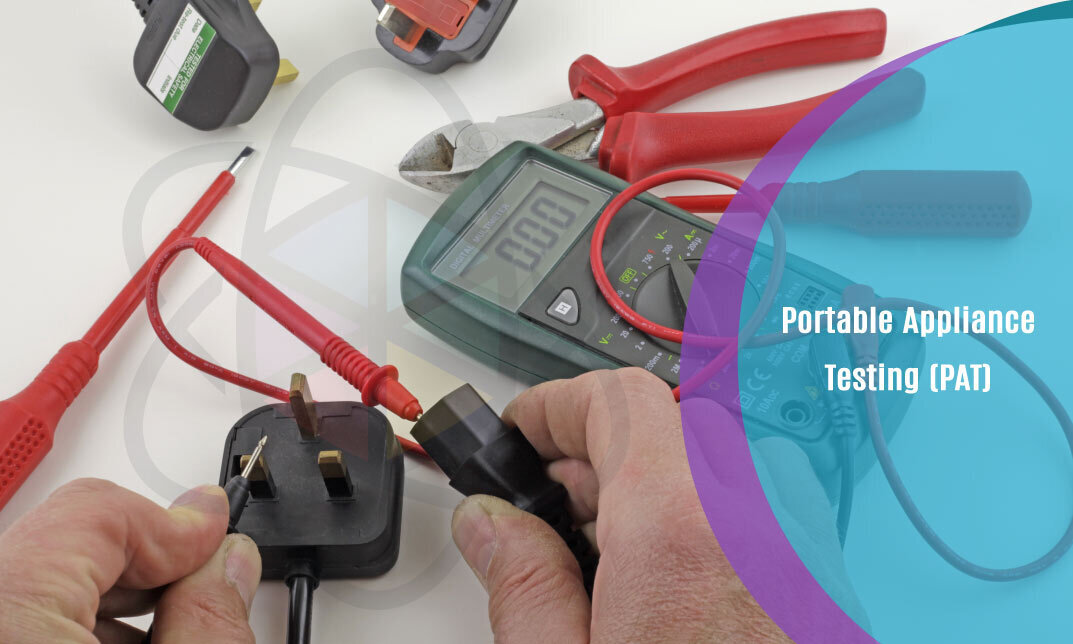
The regulatory landscape for Portable Appliance Testing (PAT) in the UK is fundamentally different from the prescriptive requirements governing fixed electrical installations or fire safety equipment. Unlike the fire extinguisher testing that is subject to British Standards and third party certification schemes, the PAT test is governed under a health and safety framework which emphasizes duty of care and risk assessment rather than mandatory schedules for periodic testing. Electricity at Work Regulations of 1989 state that portable equipment and electrical systems must be maintained so as to prevent any danger. However, the Regulations do not specify how this maintenance should be achieved, nor do they mandate a specific testing frequency or methodology. As a result, the employer is required to perform an adequate and appropriate risk assessment before determining a maintenance and testing regime. Compliance can't be proven by just a bunch of test certificate. Instead, it must include a demonstrated process of decision-making based on risk, competent execution, and thorough documentation.
1. Electricity at Work Regulations, 1989: The Legal Basis
The cornerstone of PAT testing compliance is Regulation 4(2) of the Electricity at Work Regulations 1989, which states: "As may be necessary to prevent danger, all systems shall be maintained so as to prevent, so far as is reasonably practicable, such danger." It is an absolute obligation on the part of employers and duty holders to maintain their electrical equipment. The term "systems", which includes portable devices, is used. Importantly, the regulations do NOT mention "PAT Testing"; they mandate "Maintenance," an encompassing concept which includes visual inspections, user checks, combined inspection and testing, as well as a wider concept of maintenance. The frequency and types of maintenance are determined not by a rigid legal schedule, but by the risk assessment.
2. Act 1974 on Health and Safety at Work The Act of 1974
The Health and Safety at Work and Other Legislation Act 1974 establishes general obligations employers have to employees and others. Act 1974 is the overarching legislation that establishes the general duties employers have towards employees and others. According to Section 2 of this Act, employers must ensure that all employees are safe and healthy, in the best way possible. Electrical equipment is included in the safe operation of electrical systems and plant. Section 3 extends this duty to persons not in their employment, such as visitors, contractors, and members of the public. PAT tests are a great way to ensure electrical equipment safety.
3. Code of Practice of the IET for Electrical Equipment In-Service Inspections and Testing: Guidance and Best Practice
While not law itself, the Institution of Engineering and Technology (IET) Code of Practice is the universally accepted benchmark for best practice in PAT testing. It includes detailed instructions on how to implement a maintenance program that is compliant, including:
Definitions of appliance classes and types.
Procedures for inspection and testing combined with formal visual inspections.
The equipment type, operating environment and recommended inspection and test frequencies will determine the initial frequency.
Test results must meet a pass/fail standard.
Courts and Health and Safety Executives inspectors will use the code to determine whether or not a dutyholder’s regime of maintenance is "suitable and sufficiently." If there is no documented, robust reason for a deviation from the code, it can be considered a violation of the general regulations.
4. Risk Assessment is the Priority
HSE promotes a risk-based PAT approach, moving away the outdated concept that all equipment should be tested annually. The dutyholder must conduct a risk assessment to determine the need, nature, and frequency of inspection and testing. Key factors influencing this assessment include:
Equipment type. A Class I appliance, in a workshop or low-risk environment, may require regular formal testing.
Construction sites, workshops, and warehouses present a high level of risk. Offices and hotels are generally lower risk.
Are users of equipment trained staff, or are they members of the general public.
Are you familiar with the appliance’s past history?
A compliant system is defined by this risk assessment, not by the volume of tests conducted.
5. Testers and the concept of "Competence
Regulation 16 of the Electricity at Work Regulations 1989 requires that persons engaged in work on electrical systems must possess the necessary technical knowledge and experience to avoid danger. In PAT tests, "competence", does not always require formal qualification. However, the tester must possess:
You should have a good understanding of electricity.
Understanding and practical experience of the system on which they are working.
Understanding the hazards to be aware of and what precautions are needed.
Ability to correctly interpret and use test results.
City & Guilds' 2377 qualification is a very popular qualification, and it provides an excellent education. But competence can also be attained through other means. The dutyholder will need to prove that the tester is competent.
6. Documentation and Record-Keeping Requirements
The Electricity at Work Regulations (EWR) do not specifically require recording. According to Regulation 29, it is possible to defend yourself by proving that you have taken all reasonable measures and exercised due diligence to avoid committing a crime. Primary evidence of due care is comprehensive records. A compliant system of record-keeping should include the following:
An asset register of equipment.
A record of the risk assessment and the resulting maintenance plan.
Detailed reports for each formal inspection and test, including appliance description, test results, pass/fail status, date of next test, and tester's identity.
HSE or the local authorities can easily access these records.
7. Labelling and identification of appliances
Labelling effectively is crucial to the compliance of any PAT. Each appliance which has undergone an official combined inspection/test should be labelled:
The unique ID number of the asset that links it to the record.
The date of the test.
The next date of testing (or reinspection).
The name, or identifier, of the tester.
Labels are a visual indicator for both users and inspectors of the appliance's status. Labels should not be metallic or conductive, but durable.
8. The HSE Enforcement Policy and "Mythbusting"
The HSE actively works to clarify misconceptions related to PAT testing. The HSE emphasizes that:
There is no legal requirement to have an annual test for all equipment.
There is no legal requirement that businesses use third-party contractors if their staff are competent.
Visual inspection is more important than electronics testing, and can detect the majority faults.
An enforcement official will consider a risk-based strategy. An enforcement officer may view a company less favorably if it tests all equipment blindly every year, without supporting risk assessments.
9. Interplay with Other Laws: PUWER
The Provision and Use of Work Equipment Regulations 1998 (PUWER) also applies to portable appliances. PUWER demands that work equipment is suitable for its intended uses, maintained to a safe level, and inspected in order to ensure it's safe. Regulation 6 specifies that inspections are necessary when the safety of electrical work equipment is affected by installation conditions. The PAT test is a vital method for meeting PUWER’s inspection and maintenance requirements for electrical equipment. This overlaps with the regulatory frameworks.
10. Due Diligence and Insurance Implications
While insurance companies have certain requirements, the law bases its assessment on risk. Insurance policies may require that third parties conduct PAT testing annually as a requirement for coverage. Failure to adhere to this could invalidate a claim. Insurance companies and HSE will also scrutinize the dutyholder’s risk assessment and PAT testing records in the event that an electrical incident occurs. A documented, risk-based approach is the best possible proof of due diligence. It also provides a strong defence against prosecution and invalidated insurance claims. Follow the recommended Worcester PAT testing for website examples including electrical extinguisher, electrical fire, fire extinguisher service near me, fire extinguisher servicing, all about fire extinguisher, extinguisher service, fire extinguisher testing, fire extinguisher service near me, extinguisher company, fire extinguisher fire extinguisher and more..
Ten Suggestions For Technicians Who Service Fire Extinguishers Regarding Certification And Credentials in Worcester
In the UK, there is an established framework for the provision of fire extinguisher services. It is designed to ensure security, competence and compliance. Unlike some professions with mandatory state licensing, the onus lies with the "Responsible person" (under the Regulatory Reform (Fire Safety) Order 2005) to select an experienced service provider. It is important to understand the subtleties of qualifications and certifications, as they are a part of any due diligence required by law. Since there are so many different companies and providers available with highly reputable businesses and individual operators It is crucial to distinguish between qualifications. If you choose a technician who does not have the appropriate credentials could void your insurance coverage, breach legal obligations and leave the occupants of your home and you in danger. This guide will outline the top 10 credentials and certifications that you must consider when choosing an expert to assist with your fire security.
1. The Gold Standard: UKAS Accredited Third-Party certification (BAFE Sp101)
The most important accreditation is the registration of any company with the BAFE scheme SP101. BAFE (British Approvals for Fire Equipment) is a independent registration body. SP101 is a scheme specifically designed to ensure the safety of portable fire extinguishers. The UKAS accreditation is a key element. This means that the scheme has been thoroughly evaluated against international standards. The BAFESP101 accreditation by UKAS is the strongest evidence possible of a company's competence. It verifies that a company's personnel and their work practices and equipment are regularly checked to ensure that they are in conformity to British Standards.
2. The Alternative Benchmark FIRAS Certification
FIRAS (Fire Industry Association Recognition and Accreditation Scheme), operated by the Fire Industry Association, is another scheme that is accredited by the UKAS. It is the exact equivalent to BAFE SP101, both in terms of rigor as well as reputation. FIRAS Certification gives the same degree of confidence that a business has been independently assessed, audited and found to be in compliance with every relevant standard including BS 5306-3. A business that is certified with either BAFE Sp101 or FIRAS Certification is an experienced and legally compliant option for an accountable person. The key is the UKAS accreditation of the scheme in itself.
3. The Foundation: Compliant with BS 5306-3 in Worcester
It is important to remember that any certification or certificate is based on the British Standard BS 5306-3. This is the code that defines the norm for maintenance of fire extinguishers. The requirements of the code must be understood by professionals who are skilled. They outline procedures for monthly inspections and annual service that is basic and five-year extended service for extinguishers made of foam, water or powder. They also provide 10 year overhauls for CO2 units. Certifications like BAFE and FIRAS exist to verify and confirm compliance. When you are evaluating an organisation be sure to ask them how they can ensure that their work is in line with the requirements of.
4. Individual Technician Competence – The FIA Units of Competence
While certification by a company is essential however, the work is carried out by individuals. The FIA Units of Competence which are the most widely-known personal qualifications, are the best recognized. These modules of training are national recognised and assessed in accordance with National Occupational Standards. The main units are:
FIA Module 001: Portable Fire Extinguishers Maintenance (Core Module)
FIA-Unit 010: Repairs of portable extinguishers.
A qualified technician should have at least FIA Unit 001. Technicians who provide extended services (e.g. discharges for five years) should also have Unit 010. You should ask potential providers for their specific technician qualifications.
5. The Role of Trade Associations in Worcester
Certification is not the result of being a member of an organization for trade such as the FIA. The business could be a member but not have to follow their technical rules. It's not enough to show the competence of the company. Always seek out specific certificates (e.g. the BAFE Sp101) and not rely on logos.
6. Insurance: Public Liability & Professional Indemnity in Worcester
Insurance is a crucial requirement for any trustworthy company. Public Liability Insurance is required (e.g. PS5m+) to protect against accidental damage caused to your property. Professional Indemnity Insurance can also be vital, since it covers the cost for rectifying any mistakes in their advice or workmanship. Insurances like these are required for certification. It is important to confirm the insurance before hiring their services.
7. Manufacturer-Specific Training
While the principles of the BS 5306-3 are applicable all over the world, there are some different models of extinguishers and valve mechanisms or recharge methods. A highly qualified technician will often undergo manufacturer-specific training. This is particularly true for the more intricate or difficult extinguisher type, such as the clean agent or wet chemical systems. The additional training will ensure that the technician can service every piece of equipment you have in a safe and efficient manner without voiding any manufacturers warranty.
8. The auditing process The way certification is maintained in Worcester
It's crucial to be aware that certification isn't a one-off. Auditors certified by the auditor conduct annually audits of surveillance of BAFE and FIRAS-certified firms. Audits are performed without notice and involve reviewing documents, interviewing technical staff and monitoring the work performed on-site. The continuous external scrutiny of these certificates gives them weight, ensuring that they aren't a single assessment.
9. The "Skilled Person", "Competent Person" or "Competent Person?"
There is a significant legal distinction. The Fire Safety Order requires a "competent person" to keep equipment in good working order. The term "competent person" is used by the law to describe someone who has the expertise, education and experience to carry out the required safety measures. A "skilled person" (or skilled worker) has the physical capability to perform a particular task. A certified fire-extinguisher technician must possess both: the physical skills to perform the task, aswell as the underlying competency to understand the rules, standards and risks involved.
10. Due diligence: Verifying the authenticity of certificates and claims
The person in charge is accountable for ensuring the qualifications. The mere sight of the logo on a van, or on a website does not suffice.
Verify online. You can confirm the certification status of a business by searching the internet for the company's name. company. in Worcester
Request Certificates. A reputable firm will provide you with copies of the BAFE SP101 certification or FIRAS, as well as insurance certificates and evidence of their technicians' FIA qualification. in Worcester
Check Expiry Dates. Check that all insurance certificates and policies are up to date and have the most current date. in Worcester
This verification process is your primary defense against using an unqualified provider and is a core part of demonstrating your own due diligence. Have a look at the top Worcester fire extinguisher maintenance for site tips including fire extinguisher company, fire extinguisher service near me, fire extinguisher extinguisher, fire service, fire service fire extinguisher, fire extinguisher fire, extinguisher testing, testing a fire extinguisher, fire extinguisher, fire extinguisher for an electrical fire and more. More broadly, view the recommended fire extinguisher inspection for more.
