
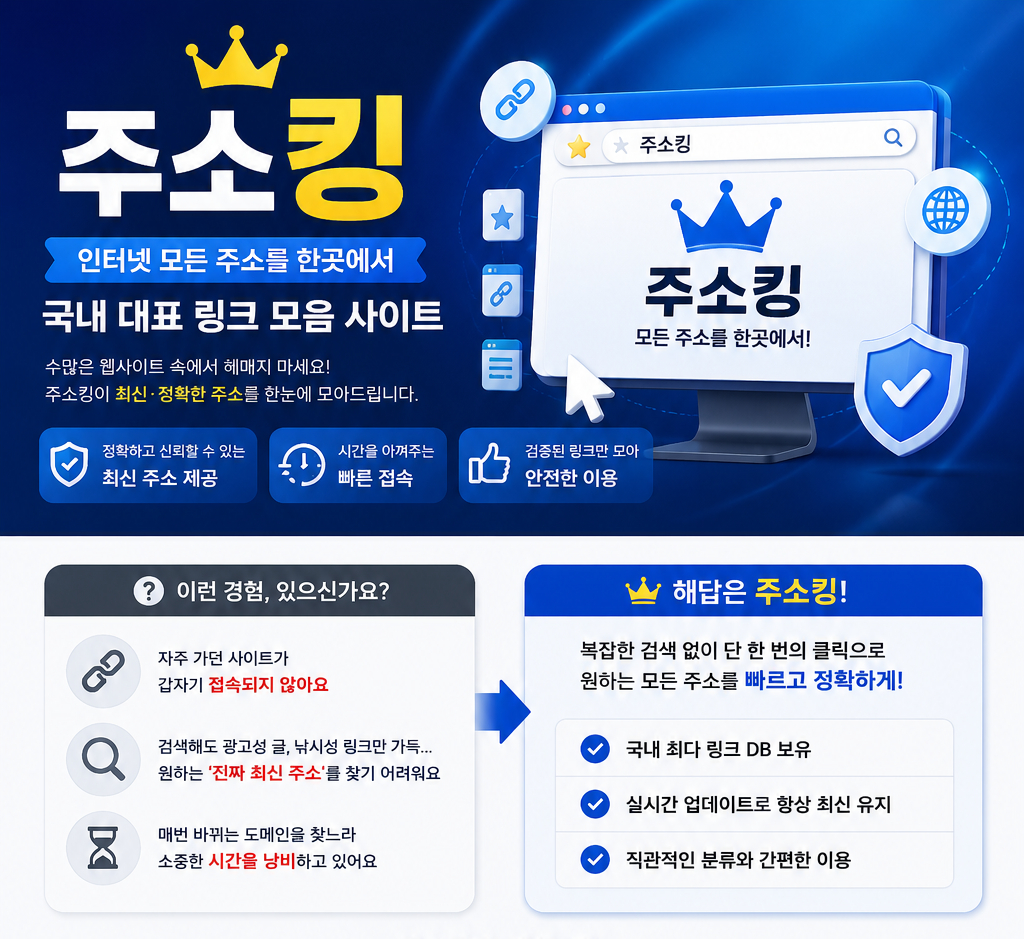
In today's digital world, people save dozens or even hundreds of website addresses for work, education, shopping, entertainment, and research. Without a proper system, these valuable links quickly become scattered across browsers, notes, emails, and messaging apps, making them difficult to find when needed. An address link collection is a practical solution that helps users organize, categorize, and retrieve important web addresses efficiently. Whether you are a student, business professional, freelancer, or casual internet user, maintaining a structured collection of links can save time, reduce frustration, and improve productivity. Instead of repeatedly searching for the same websites, you can keep everything in one organized location that is easy to access from any device. 주소킹.
Creating an effective address link collection begins with identifying the websites you use most often. Rather than saving every page you visit, focus on links that provide lasting value. These may include educational resources, business tools, government websites, online banking portals, cloud storage platforms, project management systems, news outlets, and reference materials. Organizing these links into meaningful categories allows you to locate information quickly. Categories such as Work, Education, Finance, Health, Shopping, Entertainment, and Travel help create a logical structure that reduces clutter and improves navigation. A well-organized collection becomes increasingly valuable as the number of saved links grows.
Consistency plays an important role in maintaining an organized link collection. Giving links clear and descriptive names makes them easier to recognize later. Instead of using generic titles or automatically generated page names, rename saved links with meaningful descriptions that clearly indicate their purpose. For example, a bookmark titled "Monthly Expense Tracker" is much more useful than one labeled with a random webpage title. This simple habit minimizes confusion and allows users to identify the correct resource without opening multiple links. Clear labeling is especially beneficial for professionals managing large collections of industry resources or collaborative project materials.
Many modern tools make address link collection easier than ever before. Web browsers offer built-in bookmarking features, while dedicated bookmark management applications provide advanced organization through folders, tags, search functions, and synchronization across multiple devices. Cloud-based solutions allow users to access their collections from smartphones, tablets, and desktop computers without manually transferring data. Some platforms even support team collaboration, enabling colleagues to share organized collections of important resources. Choosing the right tool depends on personal preferences, workflow requirements, and the level of organization needed for daily activities.
Regular maintenance ensures that an address link collection remains useful over time. Websites frequently change their content, update their URLs, or become unavailable altogether. Reviewing saved links every few months helps remove outdated or broken addresses while adding new resources that better meet current needs. This ongoing maintenance prevents collections from becoming overcrowded with irrelevant information. A streamlined collection improves search efficiency and ensures that every saved link continues to provide value. Spending just a few minutes periodically reviewing bookmarks can significantly improve long-term organization.
Security should also be considered when managing collections of important web addresses. Some saved links may lead to financial accounts, business dashboards, healthcare portals, or confidential company resources. Using secure bookmark management tools with account protection, encryption, and two-factor authentication helps safeguard sensitive information. Users should also avoid storing login credentials directly within bookmark titles or descriptions. Separating passwords into a trusted password manager while maintaining organized address collections creates a safer and more secure browsing experience. Security practices become increasingly important as digital information continues to expand.
Address link collections also improve collaboration among teams, students, and organizations. Instead of repeatedly sending the same URLs through emails or chat messages, groups can maintain a shared collection containing approved resources, documentation, templates, research materials, and project references. This centralized approach reduces duplication, minimizes confusion, and ensures everyone has access to the latest information. Educational institutions often use organized collections to distribute learning materials, while businesses rely on shared resource libraries to improve communication and operational efficiency. Collaborative collections create a single source of truth that supports productivity across multiple users.
As technology continues to evolve, the importance of organized digital resources will only increase. Artificial intelligence, cloud synchronization, advanced search capabilities, and smart categorization are making address link collections more powerful and user-friendly than ever before. Future tools may automatically organize saved links based on browsing behavior, identify duplicate resources, recommend related websites, and archive outdated content with minimal user intervention. These innovations will further simplify digital organization while helping individuals and organizations manage growing volumes of online information more effectively.
A well-maintained address link collection is more than a simple list of bookmarked websites. It is a personalized knowledge hub that supports productivity, improves efficiency, and simplifies everyday online activities. By organizing links into logical categories, maintaining descriptive labels, reviewing collections regularly, and using secure management tools, users can transform scattered web addresses into an accessible and reliable digital resource. Whether managing personal interests, academic research, or professional responsibilities, an organized collection of web addresses provides lasting value and ensures important information is always available when it is needed most.